



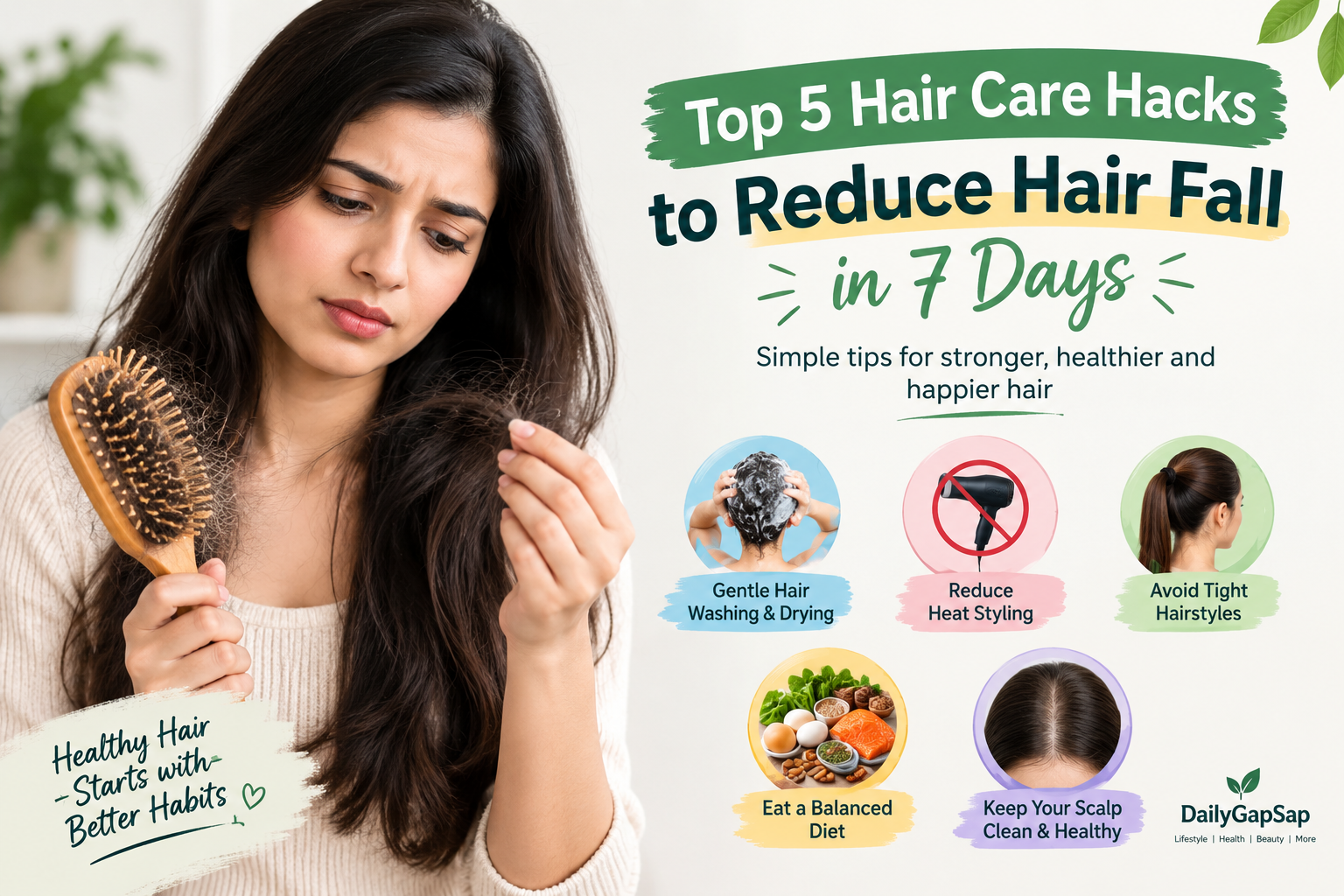
Hair fall is one of the most common hair concerns people experience today. Seeing extra hair on your pillow, comb, clothes, or shower drain can be worrying. The good news is that some everyday habits can be improved quickly to reduce unnecessary hair breakage and support a healthier scalp and hair-care routine.
However, it is important to understand that hair fall cannot always be completely stopped in just 7 days. Hair growth happens gradually, and excessive shedding can sometimes be linked to stress, nutritional deficiencies, hormonal changes, illness, medications, or scalp conditions.
If you are experiencing mild or temporary hair fall, these five simple hair care hacks can help you take better care of your hair starting today.
What Causes Hair Fall?
Before trying any hair fall solution, it helps to understand that shedding can have many different causes. Some hair shedding is normal because the hair growth cycle naturally includes a shedding phase.
Temporary increased hair fall may occur after periods of stress, poor sleep, illness, significant dietary changes, or other physical changes. Hair can also become more fragile because of frequent heat styling, chemical treatments, tight hairstyles, rough brushing, or excessive pulling.
Some people may also experience hair loss associated with nutritional deficiencies, thyroid problems, hormonal changes, scalp conditions, or hereditary factors.
Because the cause matters, a routine that works for one person may not work for another.
Top 5 Hacks to Reduce Hair Fall
1. Be Gentle While Washing and Drying Your Hair
One of the easiest changes you can make is to handle your hair gently.
Wet hair is more prone to stretching and breaking, so avoid aggressively rubbing it with a towel immediately after washing. Instead, gently squeeze out excess water and use a soft towel or cotton T-shirt to dry your hair.
When washing your hair, concentrate shampoo mainly on the scalp rather than aggressively scrubbing the entire length of your hair. Choose a shampoo that suits your scalp and hair type.
After shampooing, use conditioner on the lengths and ends if your hair tends to become dry or tangled. Conditioner can make hair easier to manage and may help reduce breakage caused by combing.
Quick Tip
Avoid brushing your hair aggressively when it is soaking wet. If you need to detangle it, use a suitable wide-tooth comb and work gently from the ends upward.
2. Reduce Heat Styling for the Next 7 Days
Frequent use of straighteners, curling irons, and high-heat blow dryers can contribute to hair damage and breakage.
If your goal is to improve your hair-care routine, consider taking a short break from heat styling. Allow your hair to dry naturally whenever practical, and avoid using extremely hot settings.
If you do use a heat-styling tool, use a heat-protective product and keep the temperature as low as practical for the style you want.
It is also useful to avoid repeatedly applying heat to the same section of hair.
Why It Matters
Hair that is dry or damaged can break more easily. Reducing unnecessary heat exposure can help protect the existing hair shaft and make your hair look healthier over time.
Remember that reducing breakage is different from treating the underlying causes of hair loss.
3. Avoid Tight Hairstyles
Tight ponytails, buns, braids, and other hairstyles that continuously pull on the hair can put stress on the hair and scalp.
If you regularly wear your hair tightly tied, try switching to looser hairstyles. Use hair ties that do not pull or snag your hair, and change the position of your ponytail or bun rather than applying tension to exactly the same area every day.
For the next seven days, give your hair more freedom whenever possible.
Simple Hair-Care Habits
- Avoid excessively tight ponytails.
- Do not pull hair while tying it.
- Avoid sleeping with very tight hairstyles.
- Use gentle hair accessories.
- Give your scalp a break from styles that create continuous tension.
If you notice thinning around areas where your hairstyle repeatedly pulls the hair, it is worth discussing the problem with a dermatologist.
4. Pay Attention to Your Diet
Healthy hair requires adequate nutrition. Instead of focusing on a single “hair growth food,” concentrate on maintaining a balanced diet that provides sufficient protein, vitamins, minerals, healthy fats, and other nutrients.
Protein is particularly important because hair is primarily made of a protein called keratin.
Include a variety of nutritious foods in your regular meals, such as eggs, dairy products, pulses, beans, nuts, seeds, vegetables, fruits, and other protein-rich foods that fit your dietary preferences.
Avoid crash diets or extreme calorie restriction. Significant dietary restriction can sometimes contribute to increased hair shedding.
What About Hair Supplements?
Hair supplements are heavily marketed for hair growth, but they are not automatically necessary for everyone. Taking large amounts of certain vitamins or minerals without a confirmed deficiency can be unnecessary and, in some cases, harmful.
If you suspect a nutritional deficiency is contributing to your hair fall, speak with a healthcare professional rather than randomly starting multiple supplements.
5. Keep Your Scalp Clean and Follow a Consistent Routine
A clean and well-maintained scalp is an important part of good hair care.
How frequently you should wash your hair depends on your scalp, hair type, lifestyle, and personal needs. People with an oily scalp may need more frequent washing, while people with a dry scalp may prefer less frequent washing.
Choose products according to your scalp and hair type instead of following a routine simply because it works for someone else.
If you have persistent dandruff, itching, redness, scaling, or other scalp symptoms, consider getting professional advice because these symptoms may require specific treatment.
A Simple 7-Day Hair-Care Routine
For the next seven days, focus on consistency rather than trying several new products at once.
Morning:
Maintain a balanced breakfast and avoid unnecessarily tight hairstyles.
During the day:
Protect your hair from excessive heat and avoid repeatedly touching, pulling, or brushing it.
Hair-wash days:
Use a suitable shampoo on the scalp and conditioner on the lengths when appropriate. Handle wet hair gently.
Night:
Keep your hairstyle loose and avoid going to bed with tightly tied hair.
Most importantly, give your routine time. Healthy hair growth is a gradual process, so seven days should be viewed as a period for improving your habits rather than a guaranteed hair-loss cure.
Does Hair Oiling Stop Hair Fall?
Hair oiling is a traditional hair-care practice and can make some people’s hair feel softer and easier to manage. However, applying oil does not guarantee that hair loss will stop.
If oiling makes your hair feel comfortable, you can include it in your routine, but avoid aggressively massaging or scratching the scalp. Excessive friction can cause additional hair breakage.
Also, avoid leaving heavy oil on the scalp if it causes irritation or worsens your scalp problems.
When Should You See a Dermatologist?
Occasional hair shedding can be normal, but persistent or significant hair loss deserves attention.
Consider speaking with a dermatologist or healthcare professional if you notice:
- Sudden or unusually heavy hair shedding
- Clearly visible thinning
- Bald patches
- Receding hairline or rapidly changing hair density
- Scalp redness, pain, severe itching, or scaling
- Hair loss that continues for several weeks or months
- Hair loss accompanied by other unexplained symptoms
A dermatologist can evaluate your scalp and hair and determine whether further examination or testing is appropriate.
Final Thoughts
Reducing hair fall starts with understanding what may be causing it. While there is no guaranteed way to stop hair fall completely in 7 days, small changes can help reduce avoidable hair damage and improve your overall hair-care routine.
Start by handling your hair gently, reducing heat styling, avoiding tight hairstyles, eating a balanced diet, and maintaining a scalp-care routine that suits your needs.
Remember that hair growth takes time. If your hair fall is sudden, excessive, persistent, or accompanied by scalp changes, professional medical advice is more useful than trying multiple home remedies or supplements on your own.
Frequently Asked Questions About Hair Fall
1. Can hair fall be stopped in 7 days?
There is no guaranteed method to completely stop hair fall within seven days. However, improving hair-care habits during this period may help reduce unnecessary breakage and support healthier hair management.
2. What is the best hair care routine for hair fall?
A basic routine includes gentle washing, appropriate conditioning, avoiding excessive heat and tight hairstyles, maintaining a balanced diet, and keeping the scalp clean.
3. Does oiling reduce hair fall?
Hair oiling may help with softness and manageability for some people, but it is not a guaranteed treatment for hair loss. Persistent hair loss should be evaluated according to its underlying cause.
4. How can I reduce hair breakage?
Avoid excessive heat, harsh brushing, tight hairstyles, and rough towel drying. Conditioning the hair and handling it gently can also help reduce mechanical damage.
5. When is hair fall a concern?
Hair fall may need professional evaluation when it is sudden, excessive, persistent, associated with bald patches or noticeable thinning, or accompanied by scalp symptoms.
6. Can diet affect hair fall?
Yes. Poor nutrition and significant dietary restriction can contribute to hair problems in some people. A balanced diet with adequate protein and essential nutrients supports normal hair health.
