


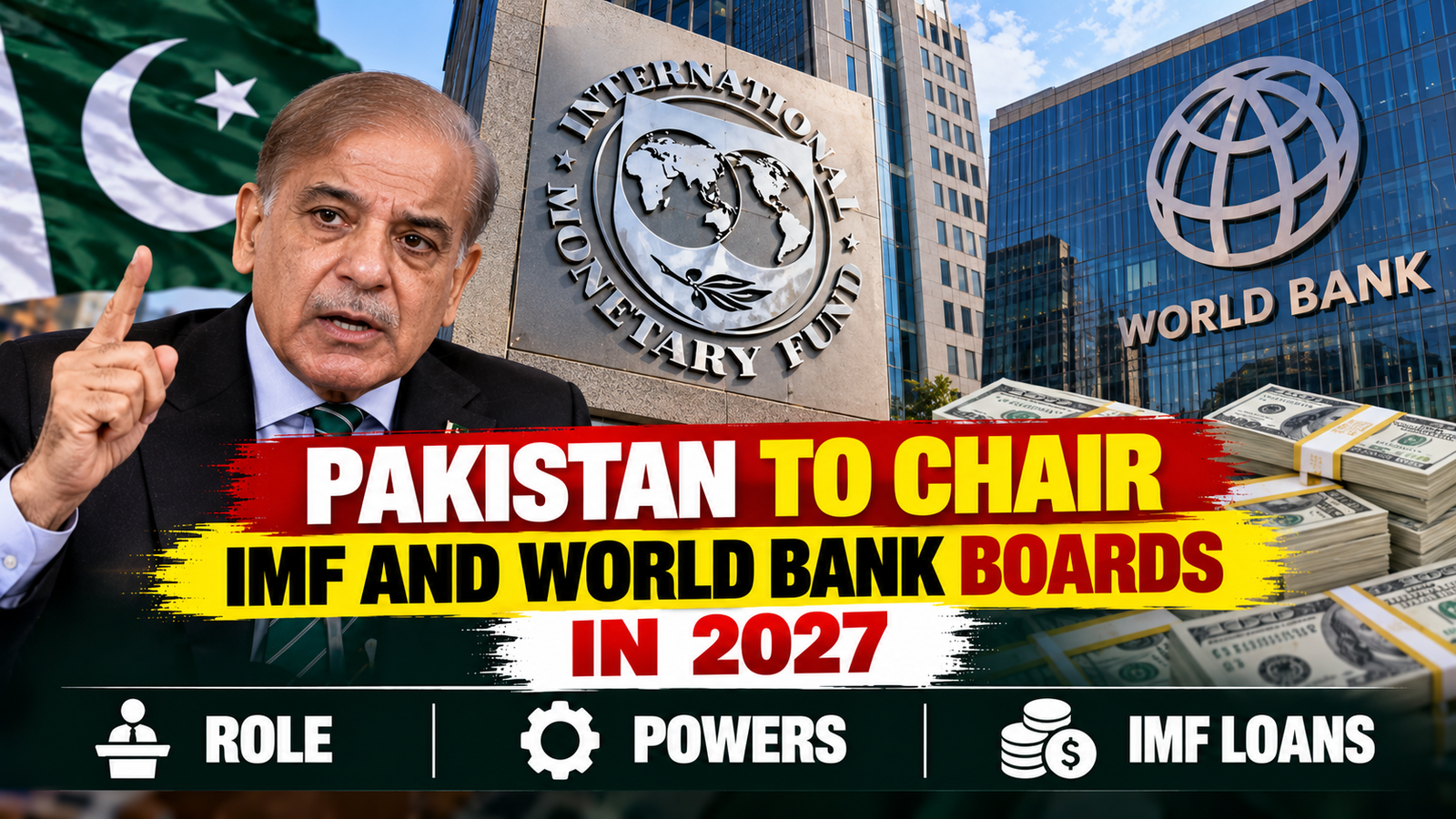
Pakistan will chair the Boards of Governors of the International Monetary Fund (IMF) and the World Bank Group in 2027 for the first time since 1953. The announcement was made during the 2026 IMF-World Bank annual meetings in Bangkok, Thailand, on October 16.
Pakistan’s Economic Affairs Minister, Ahad Khan Cheema, has been named the incoming chair. The appointment gives Pakistan a formal leadership role in the institutions’ annual meetings, where member countries discuss global economic conditions, development financing and international cooperation.
However, the chairmanship does not give Pakistan additional voting rights or control over IMF loans and World Bank funding. According to reporting by Dawn, the position is mainly procedural and diplomatic.
Why Will Pakistan Chair the IMF and World Bank Boards in 2027?
Pakistan’s Ministry of Economic Affairs confirmed the appointment during the annual meetings in Bangkok. The country last held the chairmanship in 1953, making the 2027 term its first return to the position in 74 years.
Ahad Khan Cheema, who serves as Pakistan’s Minister for Economic Affairs and its governor to the World Bank, was formally announced as the incoming chair.
According to the official announcement from Pakistan’s Ministry of Economic Affairs, the country intends to encourage constructive dialogue among member nations and contribute to discussions on global economic and development priorities.
The appointment comes at a time when developing countries are seeking access to predictable financing, investment and support for sustainable economic growth.
What Does the IMF and World Bank Chairmanship Mean?
The Boards of Governors are the highest governing bodies of the IMF and World Bank Group. Each member country appoints a governor to represent it.
The chair helps conduct the boards’ proceedings, establishes the order of speakers during sessions and supports arrangements for the annual meetings.
However, most day-to-day operational responsibilities are delegated to the institutions’ respective Executive Boards. The chairmanship does not allow Pakistan to independently approve loans, change the institutions’ lending policies or direct their operations.
This distinction is important because the appointment is a leadership responsibility within an international institution, not a transfer of financial control to Pakistan.
Does Pakistan Get More Voting Power or IMF Loans?
No. Pakistan’s chairmanship does not automatically increase its voting power or provide preferential access to financial assistance.
IMF lending decisions follow the institution’s established procedures and depend on factors such as programme conditions, economic assessments and approval requirements. World Bank financing also follows separate institutional processes.
As explained in Dawn’s report on the chairmanship, the position does not provide Pakistan with additional authority over lending decisions.
The appointment may increase Pakistan’s diplomatic visibility, but its financial relationship with the IMF and World Bank will continue to depend on existing rules and agreements.
Pakistan’s IMF Loan Programmes Explained
Pakistan’s appointment comes as the country continues to rely on IMF-supported programmes to address economic challenges and support reforms.
1. $7 billion Extended Fund Facility
Pakistan has a $7 billion Extended Fund Facility (EFF) programme. It aims to support economic reforms and address balance-of-payments pressures.
Programmes of this kind generally involve policy commitments related to public finances, economic stability and other areas agreed upon with the IMF.
2. $1.4 billion Resilience and Sustainability Facility
Pakistan also has a $1.4 billion Resilience and Sustainability Facility (RSF) arrangement. It is designed to support longer-term reforms and strengthen the country’s ability to address climate-related economic risks.
Climate-related disasters can damage infrastructure, disrupt agriculture and increase pressure on government finances. Resilience-focused financing is intended to help countries address some of these longer-term challenges.
Recent reporting indicated that Pakistan could receive another $1.2 billion after an agreement with IMF staff on programme reviews. The anticipated disbursement remains subject to approval by the IMF Executive Board.
These financial arrangements are separate from Pakistan’s chairmanship appointment.
What Could Pakistan Focus on During Its 2027 Term?
Pakistan’s Ministry of Economic Affairs has outlined several broad priorities for its engagement with international financial institutions.
These include:
- Development financing: Encouraging predictable funding for developing economies.
- Economic cooperation: Supporting constructive discussions among member countries.
- Climate resilience: Giving attention to financial risks linked to climate change.
- Private investment: Encouraging private capital to support sustainable development.
- International coordination: Improving cooperation among multilateral development institutions.
These are stated priorities rather than guaranteed outcomes. Specific initiatives will depend on the formal agenda and decisions made during the 2027 meetings.
When Will Pakistan Assume the Chairmanship?
Pakistan has been designated as the incoming chair for 2027. According to reporting by Dawn, the 2027 annual meetings are scheduled for October 4–9 in Washington, DC.
The chairmanship will give Pakistan a role in conducting the annual meetings and facilitating discussions among member countries.
The broader impact will depend on how the country carries out its responsibilities and contributes to international economic discussions.
Pakistan’s IMF and World Bank Chairmanship: Frequently Asked Questions
1. When will Pakistan chair the IMF and World Bank boards?
Pakistan will assume the chairmanship in 2027. The appointment was announced during the 2026 annual meetings in Bangkok on October 16.
2. Who will chair the boards on behalf of Pakistan?
Ahad Khan Cheema, Pakistan’s Minister for Economic Affairs and its governor to the World Bank, has been named the incoming chair.
3. When did Pakistan last hold this position?
Pakistan last held the chairmanship in 1953. The 2027 term will mark its return after 74 years.
4. Does the chairmanship give Pakistan control over IMF loans?
No. Pakistan will not gain unilateral authority to approve IMF loans or World Bank funding. Lending decisions remain subject to each institution’s rules and approval procedures.
5. How much IMF assistance does Pakistan have?
Pakistan has a $7 billion Extended Fund Facility and a $1.4 billion Resilience and Sustainability Facility arrangement. These programmes have separate objectives and conditions.
6. Will Pakistan automatically receive more money from the IMF in 2027?
No. The chairmanship does not guarantee additional financial assistance. Any future disbursement will depend on the relevant programme requirements and institutional approvals.
7. Why is Pakistan’s appointment important?
The appointment gives Pakistan an opportunity to facilitate discussions among member countries and contribute to global economic and development priorities. It does not, however, give the country additional voting power or control over lending decisions.
Final Takeaway
Pakistan will chair the Boards of Governors of the IMF and World Bank Group in 2027, returning to the position for the first time since 1953. Ahad Khan Cheema has been named the incoming chair.
The appointment provides Pakistan with a formal role in international economic discussions, including development financing and cooperation among member countries. However, it does not automatically improve Pakistan’s access to loans or give it greater authority over the institutions.
The significance of the 2027 term will depend on how Pakistan fulfils its responsibilities and contributes to the discussions taking place during the annual meetings.
