


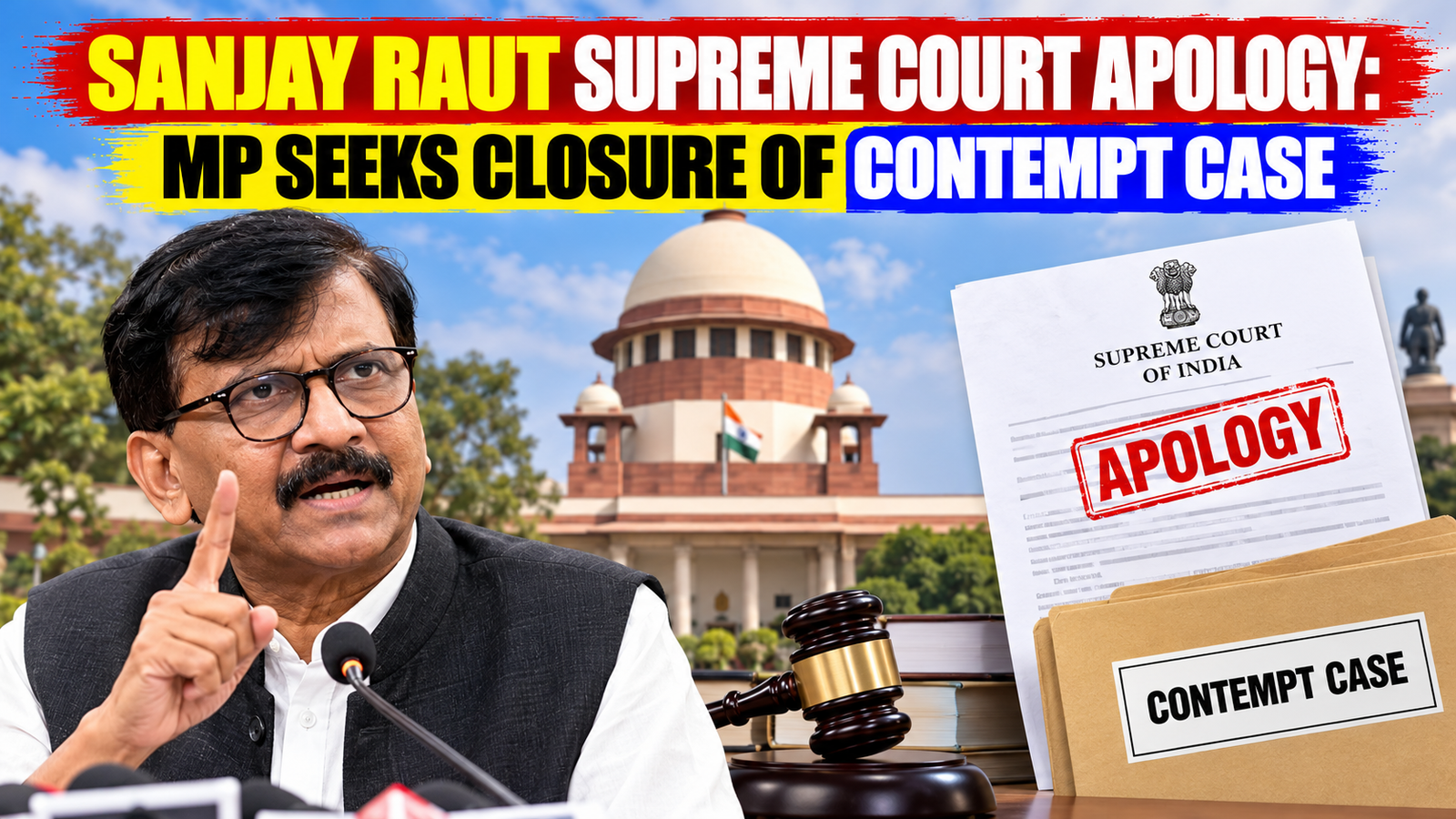
The Sanjay Raut Supreme Court apology has become a major legal and political development after the Shiv Sena (UBT) Rajya Sabha MP submitted an unconditional apology over his remarks concerning the judiciary and Chief Justice of India Surya Kant. Raut has asked the Supreme Court to accept his apology and close the proposed criminal contempt proceedings against him.
According to reports published on October 29, 2026, Raut expressed regret in an affidavit and stated that he respected the dignity, independence and authority of the judiciary. The development came after the Supreme Court directed him to appear personally on November 17 in connection with a contempt petition filed by the Supreme Court Bar Association (SCBA).
However, the submission of an apology does not automatically end contempt proceedings. The Supreme Court must consider the request and decide how the matter should proceed.
Why Did Sanjay Raut Apologise to the Supreme Court?
Sanjay Raut submitted an unconditional apology following controversy over his public remarks about the judiciary and Chief Justice Surya Kant.
In his affidavit, Raut reportedly expressed sincere regret and said he had no intention of disrespecting the Supreme Court or undermining the authority of the judicial institution. He also acknowledged that public statements concerning the judiciary require responsibility, careful consideration and restraint.
Raut asked the Court to forgive him and consider closing the proceedings initiated over the disputed remarks.
His apology came amid ongoing criminal contempt proceedings arising from a petition filed by the Supreme Court Bar Association. The case concerns statements that the association alleges undermined the dignity and authority of the judiciary.
The Court will determine whether the apology is sufficient and what further action, if any, is appropriate.
What Did Sanjay Raut Say in His Apology Affidavit?
In his affidavit, Raut reportedly described his apology as unconditional, unqualified and voluntary.
He expressed respect for the Supreme Court and recognised its constitutional role in upholding the rule of law, protecting constitutional values and safeguarding citizens’ rights.
Raut also acknowledged the importance of maintaining public confidence in the judicial system. He said he regretted that his remarks had led to the present proceedings and undertook to exercise greater care when making public statements about the judiciary in the future.
The affidavit sought the Court’s forgiveness without attempting to justify or qualify the remarks in question.
The central issue is now whether the Supreme Court will accept the apology and discharge the notice or decide that the proceedings should continue.
What Is the Supreme Court Contempt Case Against Sanjay Raut?
The case originates from a contempt petition filed by the Supreme Court Bar Association against Raut and journalist Nikhil Wagle.
According to media reports, the association objected to statements concerning the Chief Justice and other members of the judiciary. The disputed remarks reportedly suggested that judges attended political programmes and dinners involving ruling-party figures but declined to meet opposition leaders.
The SCBA alleged that these statements were inappropriate and could undermine public confidence in the judiciary.
The controversy arose after Chief Justice Surya Kant declined a request for a personal meeting with an opposition delegation led by Rahul Gandhi and Mallikarjun Kharge concerning issues related to the Special Intensive Revision of electoral rolls.
The association subsequently pursued contempt proceedings. These are allegations raised in the case, not a final judicial finding that Raut committed contempt.
Why Did the Supreme Court Ask Sanjay Raut to Appear in Person?
On October 28, 2026, the Supreme Court directed Raut to appear personally at the next hearing, scheduled for November 17 at 2 pm.
The direction followed proceedings in the criminal contempt matter. Reports indicated that Raut’s reply affidavit was not available on the court record at that stage.
The Court’s direction meant that Raut was required to attend the next hearing in person, even as the matter concerning his explanation and apology remained before it.
The November 17 hearing is important because the Court can consider the apology, examine the status of the proceedings and issue further directions.
The eventual outcome will depend on the Court’s order. Until then, it would be premature to assume that the contempt case has been closed.
Is Sanjay Raut’s Contempt Case Closed After His Apology?
No final closure should be assumed merely because Raut has submitted an unconditional apology.
An apology is a submission that the Court may consider when deciding how to proceed. The Court must determine whether it accepts the apology and whether any further action is necessary.
Raut has requested that the Court accept his apology, discharge the show-cause notice and close the proposed criminal contempt proceedings.
The distinction is important: requesting closure is not the same as receiving a judicial order closing the case.
The next hearing was reported for November 17, 2026. Readers should look for the Court’s official order or reliable subsequent reporting to confirm the outcome.
What Is Criminal Contempt of Court in India?
Criminal contempt is a legal concept governed by the Contempt of Courts Act, 1971.
Broadly, the law covers conduct or publications that fall within statutory categories, including certain acts that scandalise or tend to scandalise a court, prejudice judicial proceedings, or interfere with or obstruct the administration of justice.
The purpose of contempt law includes protecting the administration of justice and the authority of courts. However, the law operates within a wider constitutional framework that also protects freedom of speech and expression.
Whether a particular statement amounts to criminal contempt depends on the applicable law, the facts and the judicial assessment of the matter.
In Raut’s case, the allegations in the SCBA petition and his response must be considered through the relevant legal process. The filing of an apology alone does not establish guilt or automatically determine the outcome.
What Is the Role of the Supreme Court Bar Association?
The Supreme Court Bar Association is an organisation representing advocates associated with the Supreme Court of India.
In this matter, the SCBA initiated the contempt petition concerning remarks allegedly made by Raut and Wagle about the judiciary.
The association’s position is that the disputed statements raised concerns about the dignity and authority of the Court. The petition brought the issue before the Supreme Court for consideration.
The Court, rather than the association, will decide the legal questions arising from the proceedings and determine what action is appropriate.
The case highlights the role that legal institutions can play in bringing alleged interference with the administration of justice before a competent court.
What Happens Next in the Sanjay Raut Case?
The next reported hearing is scheduled for November 17, 2026, when Raut is expected to appear personally.
The Supreme Court may consider his apology and the other relevant material before deciding the next steps. The Court could accept the apology and close the matter, seek further clarification or continue the proceedings, depending on its assessment.
No particular outcome should be treated as certain before the Court issues an order.
The case also raises broader questions about public criticism of judicial institutions, the responsibilities of political figures and the legal boundaries surrounding statements about judges.
For now, the key development is that Raut has formally apologised and sought closure. The Court’s response will determine whether the proceedings conclude or continue.
Conclusion
The Sanjay Raut Supreme Court apology marks a significant development in the criminal contempt proceedings concerning his remarks about the judiciary and Chief Justice Surya Kant.
Raut has expressed regret, reaffirmed his respect for the Supreme Court and asked that the contempt proceedings be closed. The matter follows a petition filed by the Supreme Court Bar Association and a direction requiring Raut to appear personally at the next hearing.
However, his request is still distinct from a final judicial decision. The Supreme Court’s consideration of the apology and its subsequent order will determine the future of the case.
The November 17 hearing is therefore an important date to watch for further developments.
Frequently Asked Questions (FAQs)
1. Why did Sanjay Raut apologise to the Supreme Court?
Raut submitted an unconditional apology over remarks concerning the judiciary and Chief Justice Surya Kant. He expressed regret and asked the Court to close the contempt proceedings against him.
2. Has the Supreme Court closed Sanjay Raut’s contempt case?
The submission of an apology does not automatically close the case. Raut has requested closure, but the Court’s decision must be confirmed through an official order.
3. When is Sanjay Raut’s next Supreme Court hearing?
Media reports state that the Supreme Court directed Raut to appear personally on November 17, 2026, at 2 pm.
4. Who filed the contempt petition against Sanjay Raut?
The Supreme Court Bar Association filed the contempt petition concerning remarks allegedly made by Raut and journalist Nikhil Wagle about the judiciary.
5. What were the remarks about?
The controversy concerned statements reportedly suggesting that judges attended political events involving ruling-party figures but declined to meet opposition leaders. The SCBA challenged the remarks as inappropriate.
6. What is criminal contempt of court?
Criminal contempt is defined under Indian law and includes certain conduct or publications that interfere with the administration of justice or fall within other statutory categories.
7. What could happen after Sanjay Raut’s apology?
The Supreme Court may accept the apology and close the proceedings or decide that further steps are required. The outcome depends on the Court’s assessment and order.
