


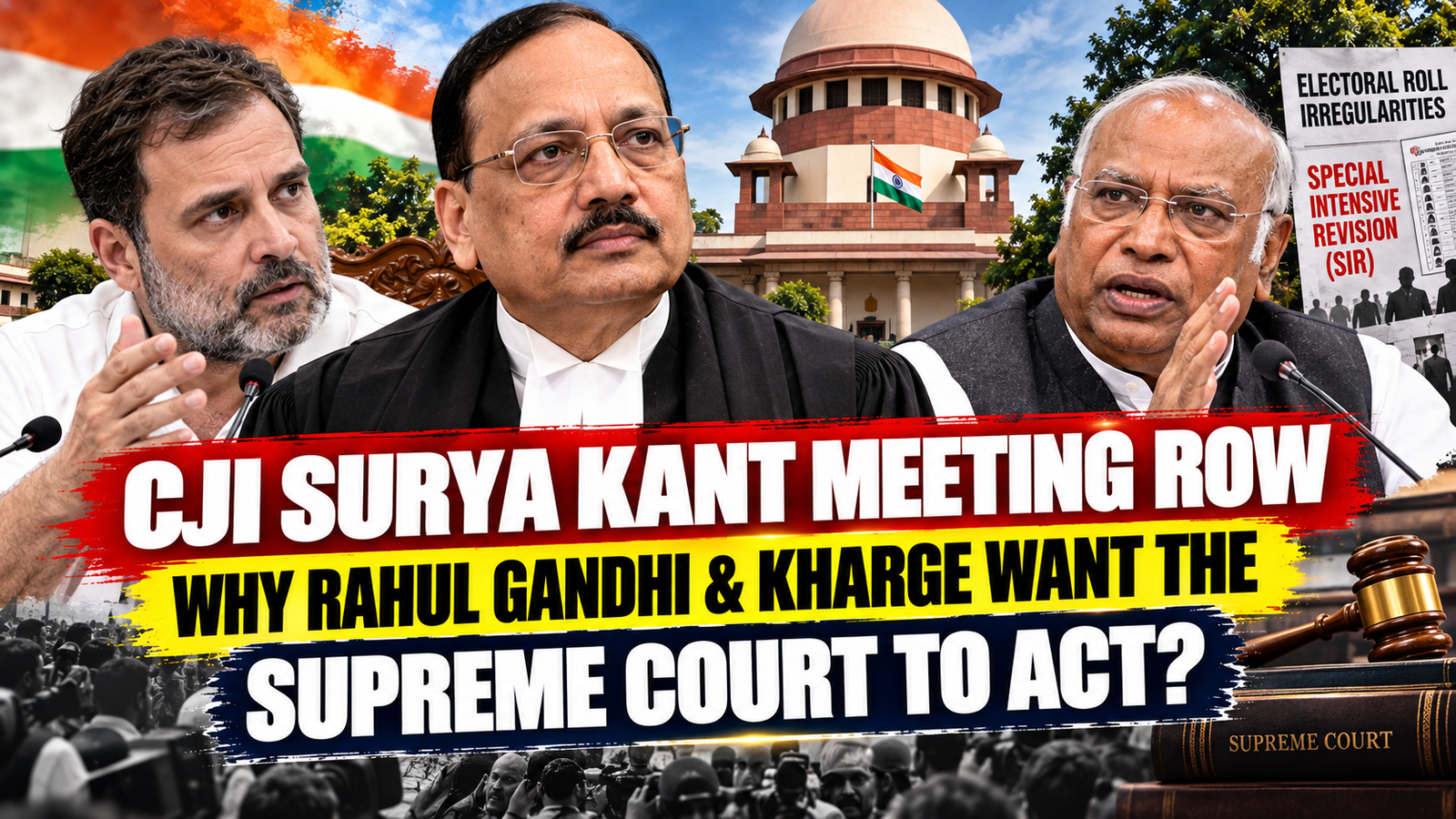
A request for a meeting with Chief Justice of India Surya Kant has brought the debate over India’s electoral process back into focus. Congress leaders Rahul Gandhi and Mallikarjun Kharge wanted to raise concerns about voter-list revision, alleged electoral irregularities and police action against protesters.
The request was declined, according to media reports. The development has added another chapter to the political dispute over how electoral complaints should be addressed and what role the judiciary can play.
Why Is the Congress Seeking Judicial Intervention?
The Congress and several opposition parties have questioned aspects of the Special Intensive Revision (SIR) of electoral rolls. They have raised concerns about whether eligible voters could be affected during the process.
Opposition leaders have also called for accountability over allegations of irregularities in elections. These remain political allegations and should be distinguished from findings established through legal or official proceedings.
By seeking to bring their concerns before the Chief Justice, the leaders aimed to draw attention to the legal and constitutional questions surrounding the controversy.
What Is the Dispute Over SIR?
The Special Intensive Revision is intended to review and update voter lists. Electoral rolls need to be accurate so that eligible citizens can exercise their right to vote.
However, the process has become contentious. Opposition parties have questioned its implementation and raised concerns about possible exclusions. The Election Commission’s role in maintaining accurate electoral rolls is central to this debate.
The key issue is how voter lists can be reviewed while ensuring that eligible voters are not unfairly left out. Complaints about specific cases need to be examined through the relevant procedures and available evidence.
Why Did the CJI Decline the Meeting Request?
Media reports say the Chief Justice indicated that the concerns should be raised through the judicial process, particularly because related matters were already pending before the Supreme Court.
This points to an important distinction between a meeting with the Chief Justice and formal legal proceedings. Parties seeking judicial relief generally need to use the appropriate court procedures rather than rely on a private meeting.
The reported response does not, by itself, determine the merits of the opposition’s allegations. Those questions must be assessed through the relevant legal process.
What Did Rahul Gandhi Say About the Planned March?
Rahul Gandhi and other opposition leaders planned to march towards the Supreme Court on October 12, 2026, to highlight their concerns.
The proposed demonstration was linked to demands for electoral accountability and action on complaints concerning voter lists. It also followed criticism of the police response to earlier protests.
The march placed the dispute in the public spotlight, but political statements and protest demands should not be confused with a judicial ruling.
What Happens Next?
The next steps depend on the formal proceedings, any petitions before the courts and responses from the relevant authorities.
The controversy raises questions about electoral transparency, the protection of voting rights and the procedures available to challenge decisions affecting voter registration.
For citizens, the most important details will be the evidence presented, the official responses and any directions issued by the courts.
Conclusion
The meeting request involving CJI Surya Kant, Rahul Gandhi and Mallikarjun Kharge has drawn attention to the wider dispute over electoral rolls and the SIR process.
The Congress wants its concerns about alleged irregularities to receive attention, while the judicial process provides the formal route for examining legal issues. The outcome will depend on the arguments, evidence and any decisions made by the competent authorities.
Editorial note: Allegations attributed to political leaders should remain clearly attributed unless independently established.
