


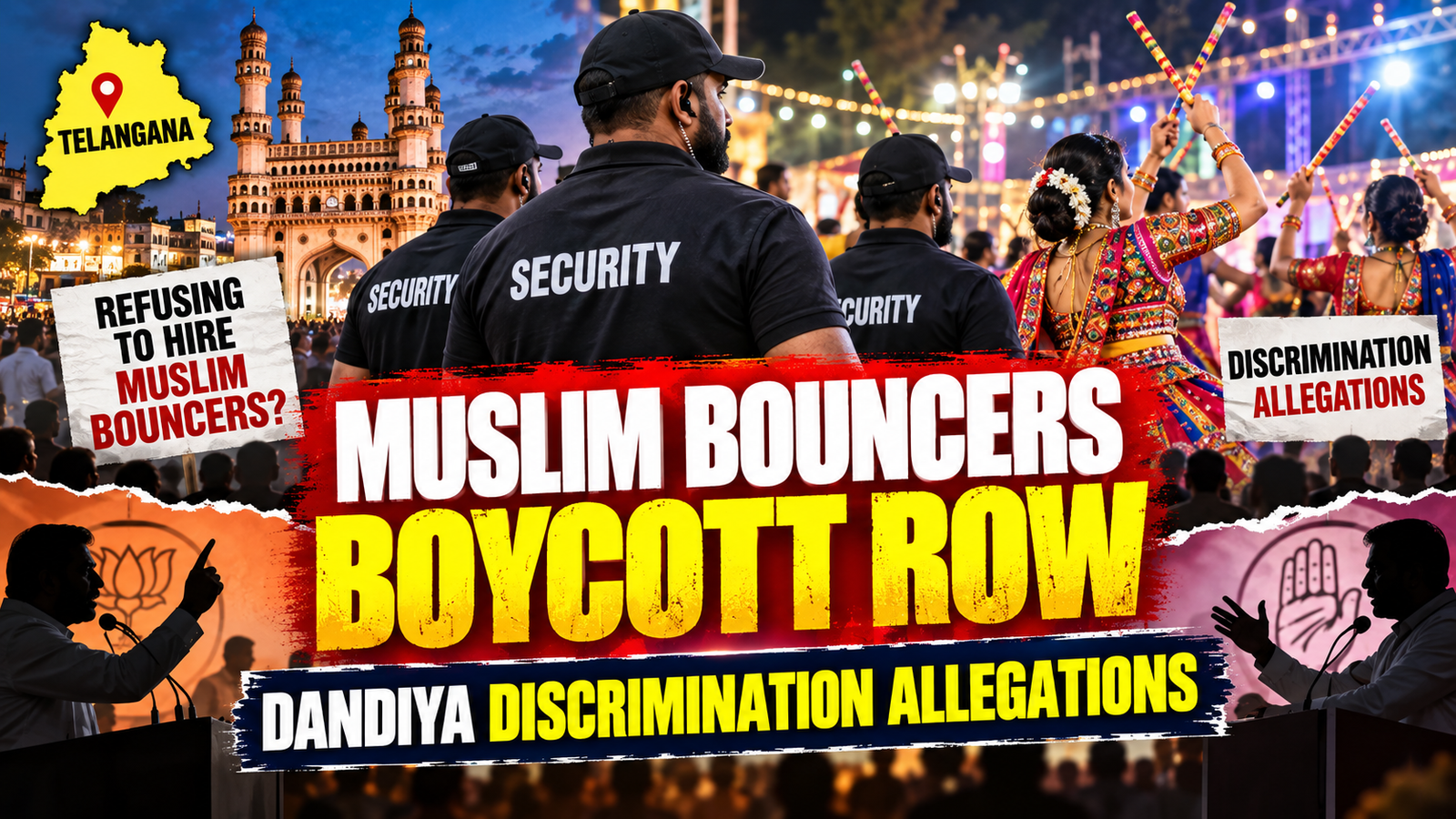
A controversy has emerged in Telangana over allegations that some Dandiya event organisers are refusing to hire Muslim bouncers for security duties during Navratri celebrations. The issue has drawn political reactions and prompted representatives of security agencies to demand equal employment opportunities for workers from all religious communities.
According to an India Today report published on October 11, 2026, representatives of Hindu and Muslim security personnel in Hyderabad have raised concerns about the alleged exclusion of Muslim bouncers from festival-season assignments.
Muslim Bouncers Raise Concerns Over Employment
Mohammad Feroz, also known as Fazal, spoke on behalf of a collective representing security personnel from different religious backgrounds. He said the alleged boycott was affecting the livelihoods of hundreds of people working in the private security industry.
Feroz emphasised that security personnel should be assessed on their professional abilities rather than their religious identity. He said workers from Hindu, Muslim, Christian and Sikh communities should receive equal opportunities.
The group also urged Dandiya organisers to consider factors such as conduct, professional skills and suitability when hiring security staff.
Bouncers Reject Allegations Related to Festival Security
Representatives of the security personnel rejected allegations linking Muslim bouncers to claims of so-called “love jihad”. They said their responsibilities at festival venues involve crowd management, maintaining security and preventing disturbances.
Feroz argued that allegations of wrongdoing should be investigated individually and that action should be taken against those found responsible under the law. He said an entire community should not lose employment opportunities because of allegations against particular individuals.
He also highlighted that his team included 10 non-Muslim bouncers who had worked with him for five years, describing their professional relationship as an example of cooperation across religious backgrounds.
Asaduddin Owaisi Calls for Action
The controversy attracted political attention after Hyderabad MP and AIMIM president Asaduddin Owaisi raised concerns about the alleged discrimination.
Owaisi reportedly called for strict police action against discriminatory practices and urged people from different religious communities to stand together. He warned that social divisions could affect Telangana’s progress and development.
His remarks followed reports that some Dandiya organisers were allegedly refusing to employ Muslim bouncers amid pressure from groups opposing their deployment.
T Raja Singh Defends the Reported Move
T Raja Singh, an MLA suspended from the BJP, defended the reported decision by some organisers to hire only Hindu bouncers for Dandiya events.
Singh questioned Owaisi’s intervention and alleged that Hindu security personnel faced restrictions during Muslim festivals. He also made allegations concerning “love jihad” at Dandiya events and threatened to stop events that employed non-Hindu security personnel.
These statements form part of the political dispute surrounding the issue. The allegations should be distinguished from independently established findings.
Security Agencies Seek Equal Employment Opportunities
Representatives of bouncer supply agencies and security personnel have appealed to event organisers and authorities to address the complaints without escalating communal tensions.
Their central demand is that hiring decisions should be based on professional qualifications, conduct and security requirements rather than religious identity.
The dispute also highlights the dependence of many private security workers on seasonal assignments during festivals and public events.
Conclusion
The controversy over Muslim bouncers at Dandiya events in Telangana has raised questions about employment opportunities, religious identity and festival security. While political leaders have expressed sharply different views, representatives of security personnel are calling for fair hiring practices and equal opportunities for workers of all faiths.
The allegations of discriminatory hiring remain central to the dispute, and any specific claims of wrongdoing should be assessed on the available evidence.
