


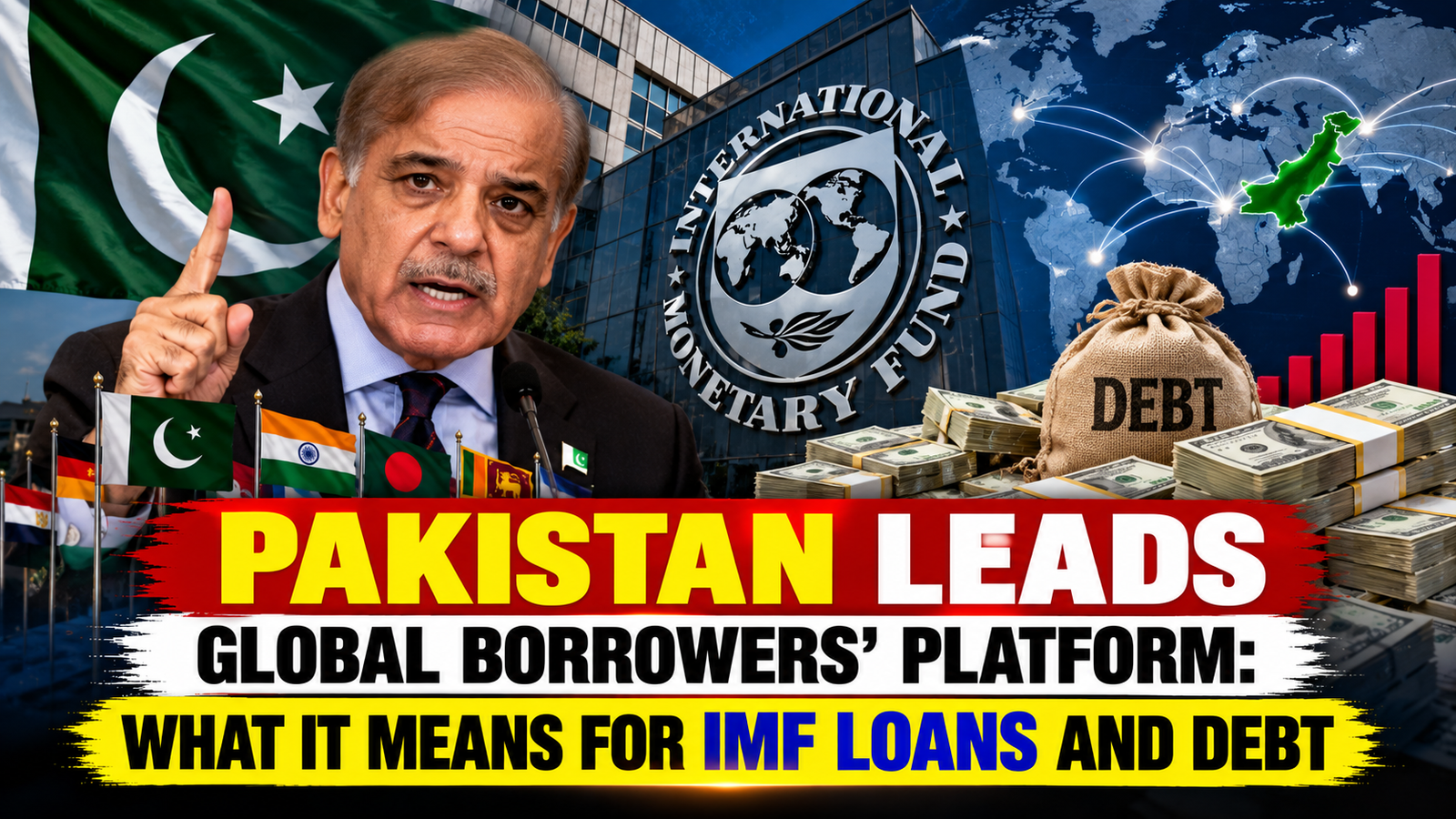
Pakistan has taken on a significant international role by becoming the chair of the Governing Council of the United Nations-backed Borrowers’ Platform. The appointment comes at a time when the country continues to face substantial external debt obligations and depends on international financial support.
The development has attracted attention because Pakistan, which narrowly avoided a sovereign default in 2023, will now help lead a platform designed to strengthen cooperation among developing countries that borrow money from international lenders.
However, the new position does not mean Pakistan will receive automatic debt relief or special treatment from the International Monetary Fund (IMF). Instead, the platform aims to help borrowing nations improve debt management, exchange experiences and make their concerns heard in global financial discussions.
What Is the Borrowers’ Platform?
The Borrowers’ Platform is an international initiative supported by the United Nations Conference on Trade and Development (UNCTAD). It brings together developing countries that borrow money to support their economies, infrastructure and public services.
The platform was formally launched on April 15, 2026, during the IMF–World Bank Spring Meetings in Washington, DC.
Its main purpose is to provide borrowing countries with a dedicated space to discuss common financial challenges. While lenders have established mechanisms for coordinating their interests, developing countries have historically lacked a comparable permanent platform to share their experiences and strengthen their collective voice.
Through this initiative, participating countries can exchange practical knowledge, learn from debt-management reforms and access technical support.
According to UNCTAD’s official Borrowers’ Platform page, the initiative is designed to improve cooperation and strengthen countries’ ability to manage debt challenges.
The platform is not a lender, a debt-cancellation programme or a collective bargaining organisation. It also does not negotiate loan terms or repayments on behalf of its members.
Why Has Pakistan Become the Chair?
Pakistan’s Finance Minister Muhammad Aurangzeb accepted the chairmanship of the platform’s Governing Council in Bangkok on October 12, 2026, according to the country’s government.
Pakistan was involved in developing the initiative before taking on the leadership position. It served as vice-chair of an initial working group led by Egypt, alongside Colombia, Honduras, the Maldives, Nepal and Zambia.
The group helped develop the platform’s objectives, governance structure and participation arrangements.
Pakistan’s new role involves guiding cooperation among member countries, supporting the exchange of debt-management experiences and helping advance the platform’s 2026–27 work programme.
The position gives Pakistan an opportunity to contribute to discussions about how developing countries can manage borrowing more effectively.
However, chairing the platform does not give Pakistan authority over the IMF, the World Bank or other international creditors. Its influence will depend on cooperation among participating countries and the practical outcomes the platform achieves.
How Much Debt Does Pakistan Have?
Pakistan has faced persistent pressure from external debt repayments, foreign currency requirements and the need for financial assistance.
According to data cited by India Today from the State Bank of Pakistan, the country’s total external debt and liabilities stood at approximately $137.55 billion at the end of March 2026.
The country has also relied on IMF programmes to help stabilise its economy and manage its external financing needs.
Key developments include:
- 2023: Pakistan secured a $3 billion IMF Stand-By Arrangement after facing a severe economic crisis and the risk of default.
- 2024: The IMF approved a longer-term $7 billion programme to support economic stabilisation and reforms.
- 2025–2026: Pakistan continued seeking international financing, including support connected to climate resilience.
- October 2026: Pakistan reached a staff-level agreement with the IMF that could unlock approximately $1.21 billion, subject to approval by the Fund’s Executive Board.
These figures refer to different programmes and financial arrangements. They should not be added together and interpreted as a single new loan or as the amount of Pakistan’s outstanding debt.
For official information on Pakistan’s IMF programmes, readers can visit the IMF’s Pakistan country page.
Will Pakistan Get Debt Relief Because It Leads the Platform?
No. Pakistan will not automatically receive lower repayments, debt cancellation or preferential loan terms because it chairs the Borrowers’ Platform.
The distinction is important because the platform’s purpose is to improve cooperation and knowledge-sharing, rather than directly negotiate financial agreements.
Pakistan must continue to meet the conditions and obligations associated with its existing loan arrangements. Any changes to those arrangements would depend on separate decisions involving the relevant creditors and institutions.
The chairmanship could nevertheless help Pakistan contribute its experiences to discussions about debt sustainability, financial transparency and economic reforms.
It may also help the country work with other developing nations facing similar challenges, including high borrowing costs and limited public resources.
The potential benefit is therefore institutional and diplomatic, rather than an immediate financial advantage.
How Does the Borrowers’ Platform Work?
The platform has a governance structure intended to combine political leadership with technical cooperation.
1. Governing Council
The Governing Council is responsible for setting priorities and guiding the platform’s overall direction. It brings together finance ministers, central bank governors and other senior government officials.
Pakistan’s chairmanship places it in a leadership role within this decision-making body.
2. Steering Committee
The Steering Committee handles technical and operational work. This helps translate the platform’s objectives into practical activities and supports cooperation between participating countries.
3. UNCTAD Secretariat
UNCTAD serves as the platform’s secretariat, providing technical and administrative support.
Its wider work includes helping countries strengthen debt-management systems and understand the economic challenges associated with borrowing.
4. Voluntary Participation
The platform is open to eligible developing-country borrowers. Participation is voluntary, and UNCTAD’s published information states that there is no mandatory membership fee at this stage.
This structure allows countries with different economic conditions to share experiences without turning the platform into a formal debt-negotiation body.
For more details, visit the official UNCTAD Borrowers’ Platform page.
Why Do Developing Countries Need a Borrowers’ Platform?
Debt is an important source of financing for developing economies. Governments may borrow to build roads, improve electricity networks, expand healthcare, strengthen education and respond to emergencies.
However, borrowing can become difficult to sustain when interest costs rise, currencies weaken or economic growth slows.
Large repayment obligations can also reduce the money available for public services and development projects.
UNCTAD has highlighted the scale of this challenge. Its published information states that developing countries’ external debt reached approximately $11.7 trillion in 2024.
The Borrowers’ Platform aims to address some of the structural challenges behind these pressures by giving borrowing countries a place to learn from one another and participate more effectively in international discussions.
Its potential benefits include:
- Sharing successful debt-management practices.
- Improving transparency and financial planning.
- Learning from economic reforms introduced by other countries.
- Accessing technical assistance and capacity-building.
- Raising common concerns in international financial discussions.
- Encouraging more sustainable borrowing and development financing.
The platform cannot remove all the risks associated with borrowing, but it may help governments make better-informed decisions.
What Benefits Could Pakistan Gain From the Leadership Role?
Pakistan’s chairmanship could provide several potential advantages, although the results will depend on how effectively the platform operates.
Greater International Visibility
Leading a UN-backed initiative gives Pakistan a role in discussions about debt management and development finance. This could strengthen its engagement with other borrowing countries.
Opportunity to Share Economic Lessons
Pakistan has experienced serious financial pressures, including foreign exchange challenges, IMF negotiations and the need for economic reforms.
Its experiences may help other countries understand the practical difficulties of managing debt during periods of economic stress.
At the same time, Pakistan can learn from countries that have implemented different approaches to fiscal management, public finance and sustainable borrowing.
Stronger Cooperation With Developing Countries
Countries often face similar challenges even when their economies differ in size. Cooperation can help governments exchange ideas and identify common concerns.
The platform offers an organised setting for that cooperation.
Improved Debt-Management Practices
Participation may help strengthen technical knowledge and improve the quality of financial planning. Better debt management can support transparency and make borrowing decisions more sustainable.
However, these are potential long-term benefits. The chairmanship itself does not guarantee lower borrowing costs or additional financial assistance.
What Are the Limitations of the Borrowers’ Platform?
Although the initiative addresses a recognised gap in international financial cooperation, its powers are limited.
First, it cannot cancel Pakistan’s existing loans or compel creditors to change repayment terms.
Second, it is not designed to negotiate debt restructuring collectively for its members. Countries that need to renegotiate their obligations must continue using the relevant arrangements and processes.
Third, sharing experiences does not guarantee that governments will successfully implement reforms. Economic conditions, political decisions and the quality of public financial management remain important.
Finally, the platform’s effectiveness will depend on participation, cooperation and measurable progress under its work programme.
For Pakistan, the challenge will be to turn its leadership position into practical improvements while continuing to manage its own financial obligations.
Conclusion
Pakistan’s appointment as chair of the UN-backed Borrowers’ Platform is an important development in international debt cooperation. It places the country in a position to help developing economies exchange knowledge, improve debt-management practices and raise shared concerns.
However, the role should not be confused with a new bailout or a mechanism for cancelling loans. Pakistan’s existing financial obligations remain separate from its responsibilities within the platform.
The initiative’s long-term value will depend on whether participating countries can translate cooperation into better financial planning, stronger institutions and more sustainable development financing.
For Pakistan, the chairmanship offers an opportunity to contribute to a broader international discussion while continuing to address its own economic challenges.
Frequently Asked Questions (FAQs)
1. What is the Borrowers’ Platform?
The Borrowers’ Platform is a UNCTAD-supported initiative that allows developing countries to share knowledge, improve debt-management capacity and discuss common borrowing challenges.
2. Why is Pakistan leading the Borrowers’ Platform?
Pakistan’s Finance Minister Muhammad Aurangzeb accepted the chairmanship of the Governing Council on October 12, 2026. Pakistan had also participated in the working group that helped establish the platform.
3. Will Pakistan get debt relief from the IMF because it chairs the platform?
No. The chairmanship does not automatically reduce Pakistan’s IMF loans or other debt repayments. Any changes to loan arrangements require separate decisions by the relevant parties.
4. How much external debt does Pakistan have?
According to State Bank of Pakistan data cited by India Today, Pakistan’s total external debt and liabilities stood at approximately $137.55 billion at the end of March 2026.
5. Does the Borrowers’ Platform negotiate loans for its members?
No. The platform focuses on knowledge-sharing, technical support and cooperation. It is not a collective loan-negotiation or debt-restructuring body.
6. Which organisation supports the Borrowers’ Platform?
The United Nations Conference on Trade and Development (UNCTAD) serves as its secretariat and provides technical and administrative support.
7. When was the Borrowers’ Platform launched?
The platform was formally launched on April 15, 2026, during the IMF–World Bank Spring Meetings in Washington, DC.
8. Why is the Borrowers’ Platform important for developing countries?
It gives developing countries a dedicated space to share debt-management experiences, strengthen technical capacity and make their concerns heard in international financial discussions.
9. Does joining the platform require a membership fee?
UNCTAD’s published information states that there is no mandatory membership fee at this stage. Participation is voluntary and subject to the platform’s eligibility arrangements.
10. What happens next under Pakistan’s chairmanship?
Pakistan will help guide the platform’s 2026–27 work programme and cooperation among members. The impact will depend on the decisions, activities and results achieved during the annual cycle
