


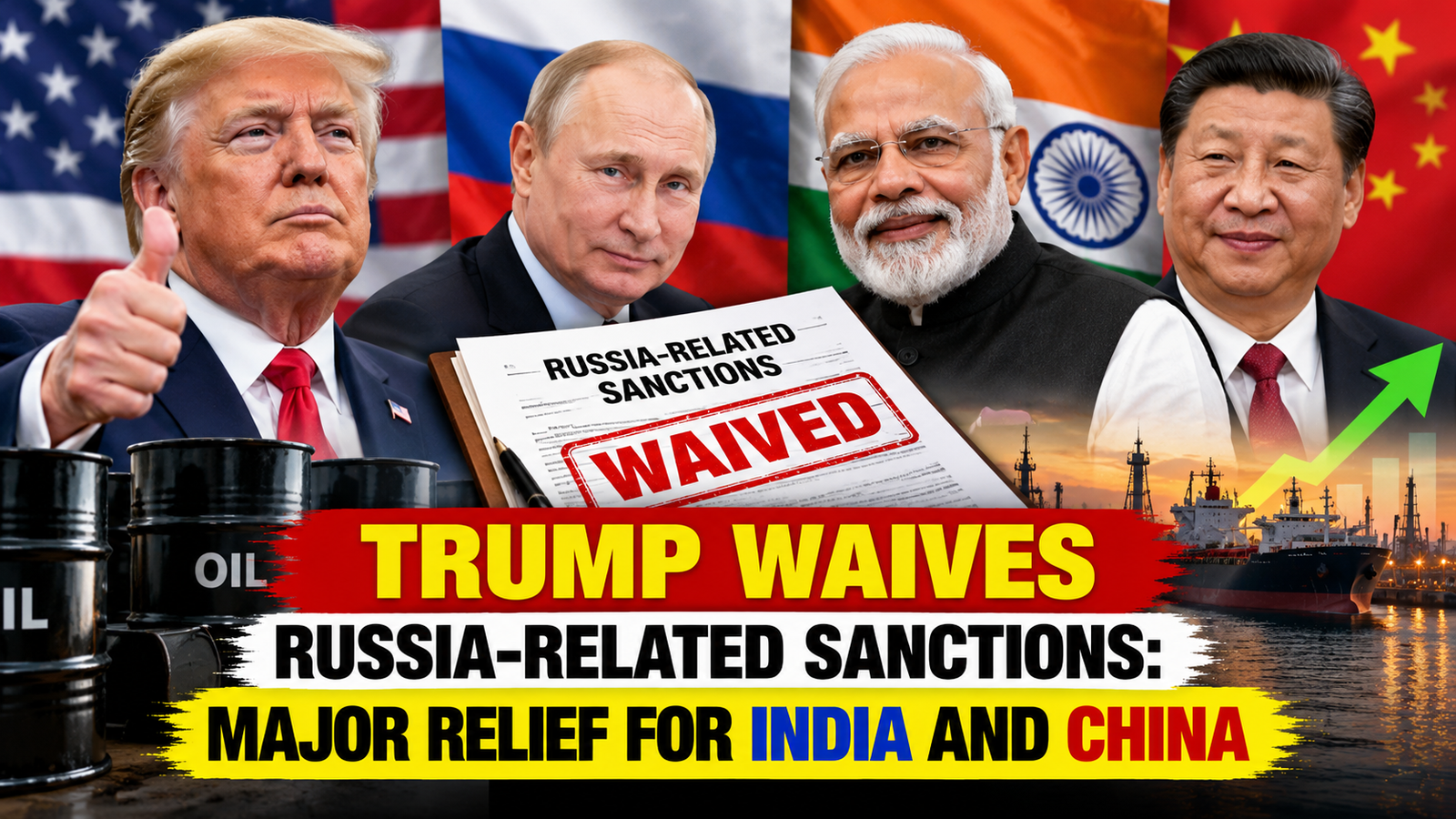
US President Donald Trump has waived the application of several Russia-related sanctions, restrictions, and tariff provisions under the Lindsey O. Graham Sanctioning Russia and Iran Act of 2026. The decision could provide significant relief to countries such as India and China, which have continued to import Russian energy.
The executive order was issued on October 16, just days before certain measures were due to take effect. Trump said the waiver was in the national interest of the United States.
The decision marks an important development in US policy towards Russia amid the ongoing war in Ukraine. It also raises questions about international trade, energy security, oil prices, and relations between Washington, New Delhi, Beijing, and Moscow.
According to NDTV’s report, the move temporarily suspends specified provisions that could have exposed major buyers of Russian oil and gas to steep US tariffs.
What Did Donald Trump Announce?
Trump issued an executive order on October 16, 2026, waiving the application of specified sanctions, restrictions, and duties provided for under the Lindsey O. Graham Sanctioning Russia and Iran Act of 2026.
The law was designed to increase economic pressure on Russia over its war against Ukraine. Among other provisions, it established a framework for imposing tariffs on certain countries purchasing Russian-origin oil and natural gas.
The order invoked the law’s waiver mechanism, which allows the US president to suspend the application of covered measures when the required national-interest certification is submitted to Congress.
Key points include:
- Trump waived specified sanctions, restrictions, and duties under the law.
- The decision came shortly before certain measures were due to take effect.
- India and China could benefit from the pause in tariff threats related to Russian energy purchases.
- The White House described the waiver as being in the national interest of the United States.
- The law itself has not been repealed by the waiver.
The full text is available on the official White House website.
What Is the Lindsey O. Graham Sanctioning Russia and Iran Act?
The Lindsey O. Graham Sanctioning Russia and Iran Act of 2026 is US legislation intended to increase economic pressure on Russia and address activities associated with sanctions evasion.
The law was signed in September 2026. It provides a framework for sanctions and restrictions involving Russian interests and allows for substantial tariffs under specified circumstances.
One of its most closely watched provisions concerns countries that continue to purchase Russian-origin crude oil and natural gas. Under the law, qualifying new purchases could trigger tariffs of up to 100% on goods imported into the United States from certain major buyers of Russian energy.
A separate provision addresses duties on Russian-origin goods. These measures are distinct from the tariff provisions targeting countries purchasing Russian energy.
The law also gives the president authority to waive covered provisions under specified conditions.
Trump’s October executive order used that authority to suspend the application of certain measures. This means the tariff threat has been paused under the specified waiver, rather than the legislation being permanently cancelled.
Why Is the Decision Important for India?
India has been a major buyer of Russian crude oil, with energy imports playing an important role in meeting the country’s domestic fuel requirements.
A potential 100% US tariff on Indian goods under the new legislation had raised concerns about trade relations and the competitiveness of Indian exports in the American market.
Trump’s waiver could reduce that immediate risk by suspending the application of the specified tariff provisions.
1. Relief From a Major Tariff Threat
A tariff of up to 100% could substantially increase the cost of affected Indian goods entering the US market if imposed under the relevant provisions.
Such a measure could make Indian products more expensive for American buyers and put pressure on exporters, depending on the products involved and the final tariff treatment.
The waiver reduces the immediate threat posed by the covered provisions. However, it does not guarantee that every existing US tariff on Indian goods has been removed.
2. More Flexibility Over Energy Imports
India has repeatedly emphasised energy security and the need to obtain supplies from multiple sources.
A pause in the specified sanctions and tariff measures could give Indian policymakers and energy companies more flexibility when evaluating Russian oil purchases.
Actual purchasing decisions will still depend on prices, shipping arrangements, payment mechanisms, supply availability, and any other applicable restrictions.
3. Implications for India-US Trade Relations
Trade policy uncertainty can influence investment, supply contracts, and long-term commercial planning.
The waiver could ease one source of immediate uncertainty for Indian exporters and businesses trading with the United States. Nevertheless, broader trade negotiations and other tariff measures remain separate issues.
For further analysis, read The Indian Express explanation of Trump’s Russia sanctions pause and its implications for India.
How Could China Benefit From the Decision?
China is another major importer of Russian energy. The tariff framework created a risk that goods from certain major buyers of Russian oil and gas could face substantial additional duties in the US market.
The waiver could therefore provide China with relief from the immediate threat posed by the specified provisions.
However, the practical impact depends on the exact scope of the waiver, the products concerned, existing trade measures, and any future decisions by the US administration.
The announcement should not be interpreted as a blanket removal of all US trade restrictions affecting Chinese goods.
What Does the Waiver Mean for Russia?
The legislation was intended to increase economic pressure on Russia by targeting its economic relationships and the international trade that supports its energy revenues.
By waiving specified provisions, the US administration has temporarily reduced the immediate effect of those measures.
The decision could give Russia and its energy partners more room to conduct certain commercial activities without facing the specific penalties covered by the waiver.
However, the full impact on Russia’s economy will depend on other sanctions, global oil prices, energy demand, export arrangements, and the future implementation of US policy.
The waiver does not mean that all US sanctions against Russia have ended.
Why Did Trump Cite the National Interest?
The White House executive order states that the president submitted a certification to Congress that issuing the waiver at that time was in the national interest of the United States.
The decision comes amid concerns about energy prices and the wider economic effects of restrictions on Russian oil and gas.
Higher energy costs can affect transport, manufacturing, agriculture, and household spending. Changes in global oil supply can also influence prices in markets far beyond the countries directly involved in sanctions.
The waiver also comes amid continuing diplomatic efforts related to the war in Ukraine and changing US relations with Russia.
Although the administration cited the national interest, the order does not establish that all tariff or energy-market concerns have been resolved.
Does the Decision Mean All Russia-Related Sanctions Have Been Removed?
No. This is an important distinction.
Trump’s executive order waives the application of specified sanctions, restrictions, and duties under the Lindsey O. Graham Act. It does not repeal the legislation itself or automatically cancel every existing US sanction against Russia.
Other sanctions may continue to operate under separate laws, executive orders, or regulatory programmes.
Similarly, the waiver should not be read as a permanent guarantee that the covered measures will never be applied. The precise legal effect depends on the order, the relevant provisions, and subsequent government action.
Businesses involved in international trade should consult official US government guidance and qualified compliance advisers before making decisions based on the announcement.
What Could Happen Next?
Several developments will determine the longer-term impact of the waiver.
Future US Sanctions Policy
The administration could issue further guidance or make additional decisions about the covered provisions. Businesses and trading partners will be watching for any changes to the waiver’s scope or duration.
India-US Trade Negotiations
The pause could ease one source of tension between the two countries. However, broader negotiations over tariffs, market access, energy purchases, and trade policy will continue to shape the relationship.
Global Oil Prices and Energy Security
Oil prices are influenced by global supply and demand, geopolitical risks, transport costs, and production decisions. The waiver may affect market expectations, but it does not guarantee lower fuel prices.
Russia-Ukraine War
The sanctions framework was intended to increase pressure on Russia over the war. The waiver may affect diplomatic calculations, but its impact on the conflict will depend on wider political and military developments.
Frequently Asked Questions (FAQs)
1. Why did Donald Trump waive Russia-related sanctions and tariffs?
Trump cited the national interest of the United States in the October 16, 2026, executive order. The waiver suspended the application of specified sanctions, restrictions, and duties under the Lindsey O. Graham Act.
2. How does the decision benefit India?
The waiver reduces the immediate threat posed by specified tariff provisions that could have affected major buyers of Russian energy, including India. It does not automatically remove every existing US tariff on Indian goods.
3. Could China also benefit from the waiver?
Yes. China is a major buyer of Russian energy and could benefit from the suspension of the specified tariff provisions. The actual effect depends on the scope of the waiver and other applicable trade measures.
4. What was the proposed tariff on major buyers of Russian oil?
The legislation established a framework for tariffs of up to 100% on goods from certain major buyers of Russian-origin crude oil and natural gas under specified conditions.
5. Has the Lindsey O. Graham Act been cancelled?
No. The waiver suspends the application of specified provisions. It does not repeal the law itself.
6. Does the decision end all US sanctions against Russia?
No. The executive order concerns specified measures under the Graham Act. Other sanctions and restrictions may remain in force under separate authorities.
7. Will the waiver reduce petrol and diesel prices in India?
Not necessarily. Indian fuel prices depend on global crude prices, exchange rates, taxes, refining costs, and domestic pricing decisions. The waiver alone does not guarantee lower petrol or diesel prices.
8. Where can readers check the official announcement?
Readers can consult the White House executive order and follow reliable reporting from NDTV for updates.
Conclusion
Donald Trump’s decision to waive specified Russia-related sanctions, restrictions, and tariff provisions marks a significant development in US foreign and trade policy.
The move could provide immediate relief to India and China from the tariff threat linked to certain purchases of Russian energy. It also highlights the complex relationship between sanctions, global energy markets, international trade, and diplomatic strategy.
However, the waiver does not repeal the Lindsey O. Graham Act or remove all existing sanctions against Russia. Its longer-term impact will depend on future US decisions, energy-market conditions, and developments in the Russia-Ukraine war.
