


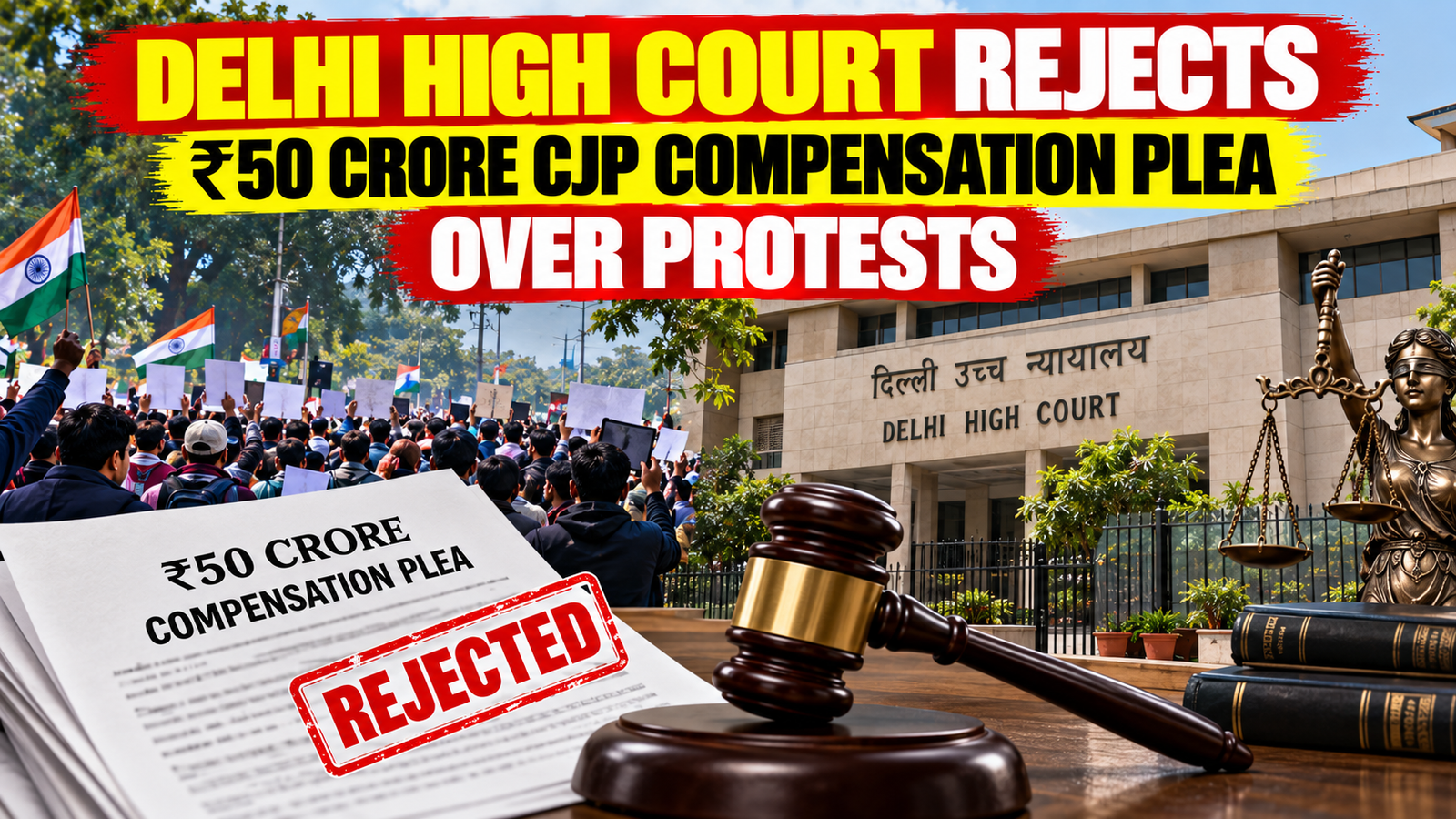
The Delhi High Court CJP compensation plea has drawn attention after the court declined to entertain a petition seeking ₹50 crore in interim compensation from the Cockroach Janta Party (CJP) over alleged public inconvenience caused by its protests in Delhi. The court said similar matters were already pending before the Supreme Court and allowed the petitioner to approach the apex court.
The petition was filed by advocate R. K. Saini, who sought compensation for residents and members of the public who allegedly faced disruption because of the demonstrations. The plea also asked authorities to consider a mechanism for imposing a community fine on organisations responsible for causing public inconvenience.
On October 28, 2026, a bench comprising Acting Chief Justice Nitin Wasudeo Sambre and Justice Sanjay Sharma declined to hear the petition on its merits. The court clarified that it had not decided whether the compensation claim was justified. https://www.jagran.com/delhi/new-delhi-city-delhi-hc-refuses-50-cr-cjp-protest-compensation-plea-40419775.html
Why Did the Delhi High Court Decline the CJP Compensation Plea?
The Delhi High Court declined to entertain the petition because related issues were already being considered by the Supreme Court. The bench said that hearing another petition on similar matters could create a risk of conflicting judicial orders.
The court referred to the large number of petitions already pending before the apex court concerning protests and their impact on the public. It therefore allowed the petitioner to raise his demands before the Supreme Court instead.
The decision was procedural rather than a final ruling on the allegations. The High Court did not determine whether CJP was legally responsible for the alleged inconvenience or whether ₹50 crore should be paid as compensation.
Who Filed the ₹50 Crore Compensation Petition?
The petition was filed by advocate R. K. Saini. He approached the Delhi High Court seeking relief for residents and members of the public who allegedly experienced inconvenience because of recent protests in the national capital.
Saini argued that demonstrations had affected people’s daily activities and caused difficulties for workers, traders, students and other residents. He maintained that the rights of ordinary citizens should also receive consideration when protests disrupt public life.
The petition sought an interim direction requiring CJP to deposit ₹50 crore with the High Court. It also requested action by government authorities to establish a mechanism for imposing and recovering community fines in appropriate cases.
These claims were presented by the petitioner. The court did not make a final finding about the extent of the alleged disruption or the party’s liability.
What Was the ₹50 Crore Compensation Demand About?
The petition sought ₹50 crore as interim compensation for what it described as harassment, inconvenience, suffering and disruption caused by CJP’s protests.
The petitioner argued that a financial penalty could discourage organisations from organising demonstrations that seriously affect the public. He also sought measures to compensate people who claimed to have suffered because of the protests.
The requested amount was part of the petition and was not an amount awarded by the court. No compensation order requiring CJP to pay ₹50 crore was issued in this proceeding.
The High Court’s decision means the petitioner can pursue the matter before the Supreme Court, where related petitions are already under consideration.
What Did the Court Say About Similar Cases in the Supreme Court?
During the hearing, the bench noted that more than 50 petitions concerning related issues were pending before the Supreme Court. The judges emphasised that judicial discipline required the High Court to avoid issuing an order that could conflict with the apex court’s consideration of the matter.
Solicitor General Tushar Mehta also informed the bench that several petitions had been filed before the Supreme Court by small traders who claimed that protests had affected their livelihoods.
Mehta suggested that Saini could approach the Supreme Court and present his demands in the proceedings already underway. He also described the petition as raising an issue of public law.
The High Court ultimately disposed of the petition while giving Saini the liberty to approach the Supreme Court. It did not decide the underlying compensation claim.
How Did CJP Protests Affect Delhi Residents?
The petition alleged that CJP’s demonstrations had disrupted daily life in Delhi. According to the petitioner, the protests caused inconvenience to ordinary residents and affected people trying to carry out their routine activities.
The plea also raised concerns about the possible impact on small businesses, traders, employees and schoolchildren. However, these were allegations made in the petition rather than findings established by the court.
Public demonstrations can create difficult questions about the right to protest and the interests of people who use roads, operate businesses or travel through affected areas. Authorities must address public order and access while following applicable laws and respecting constitutional rights.
The High Court did not resolve these broader questions through the compensation petition. Related matters remain before the Supreme Court, where the competing concerns may be considered.
What Happens Next in the CJP Compensation Case?
Following the High Court’s decision, petitioner R. K. Saini has the option to approach the Supreme Court with his request for compensation and other relief.
The apex court is already considering multiple petitions concerning the protests and their impact on members of the public. Saini may seek to present his demands within that broader legal process, subject to the applicable procedures.
The High Court’s order does not guarantee that the Supreme Court will grant the requested compensation. The apex court would need to consider the relevant legal issues, evidence and arguments before deciding what action, if any, is appropriate.
The next stage will therefore depend on whether the petitioner approaches the Supreme Court and how the pending proceedings develop.
Does the Delhi High Court Order Mean CJP Must Pay ₹50 Crore?
No. The Delhi High Court did not direct CJP to pay ₹50 crore. It declined to entertain the petition because similar matters were pending before the Supreme Court.
The court also clarified that it had not expressed an opinion on the merits of the petition. This means it did not determine whether the alleged public inconvenience justified compensation or whether CJP was liable for the amount claimed.
The distinction is important when reporting the case. A request for compensation is not the same as a court award, and the allegations in a petition should not be presented as proven facts.
Any future decision on compensation will depend on the proceedings before the appropriate court.
Conclusion
The Delhi High Court CJP compensation plea concerned a demand for ₹50 crore in interim compensation over alleged public inconvenience caused by protests in Delhi. Advocate R. K. Saini filed the petition, arguing that residents and other members of the public had experienced disruption.
The High Court declined to entertain the case because related matters were already pending before the Supreme Court. It allowed the petitioner to approach the apex court and clarified that it had not decided the merits of his claim.
The next development will depend on whether the petitioner pursues the matter before the Supreme Court and how the existing cases concerning protests are resolved.
Frequently Asked Questions
1. Why did the Delhi High Court decline the ₹50 crore CJP compensation plea?
The court declined to entertain the petition because similar issues were already pending before the Supreme Court. It allowed the petitioner to approach the apex court.
2. Who filed the CJP compensation petition?
Advocate R. K. Saini filed the petition seeking interim compensation for alleged inconvenience and disruption caused by CJP’s protests in Delhi.
3. Did the Delhi High Court order CJP to pay ₹50 crore?
No. The court did not award compensation or decide whether CJP was liable. It declined to hear the petition on its merits.
4. What did the petitioner want from the court?
The petitioner sought an interim direction requiring CJP to deposit ₹50 crore and requested measures to impose community fines for alleged public disruption.
5. Why did the court mention the Supreme Court?
The bench noted that similar matters were already pending before the Supreme Court and said that hearing the petition could risk conflicting orders.
6. What happens next in the case?
The petitioner has been allowed to approach the Supreme Court. Whether compensation or other relief is granted will depend on the further proceedings and the court’s decision.
