


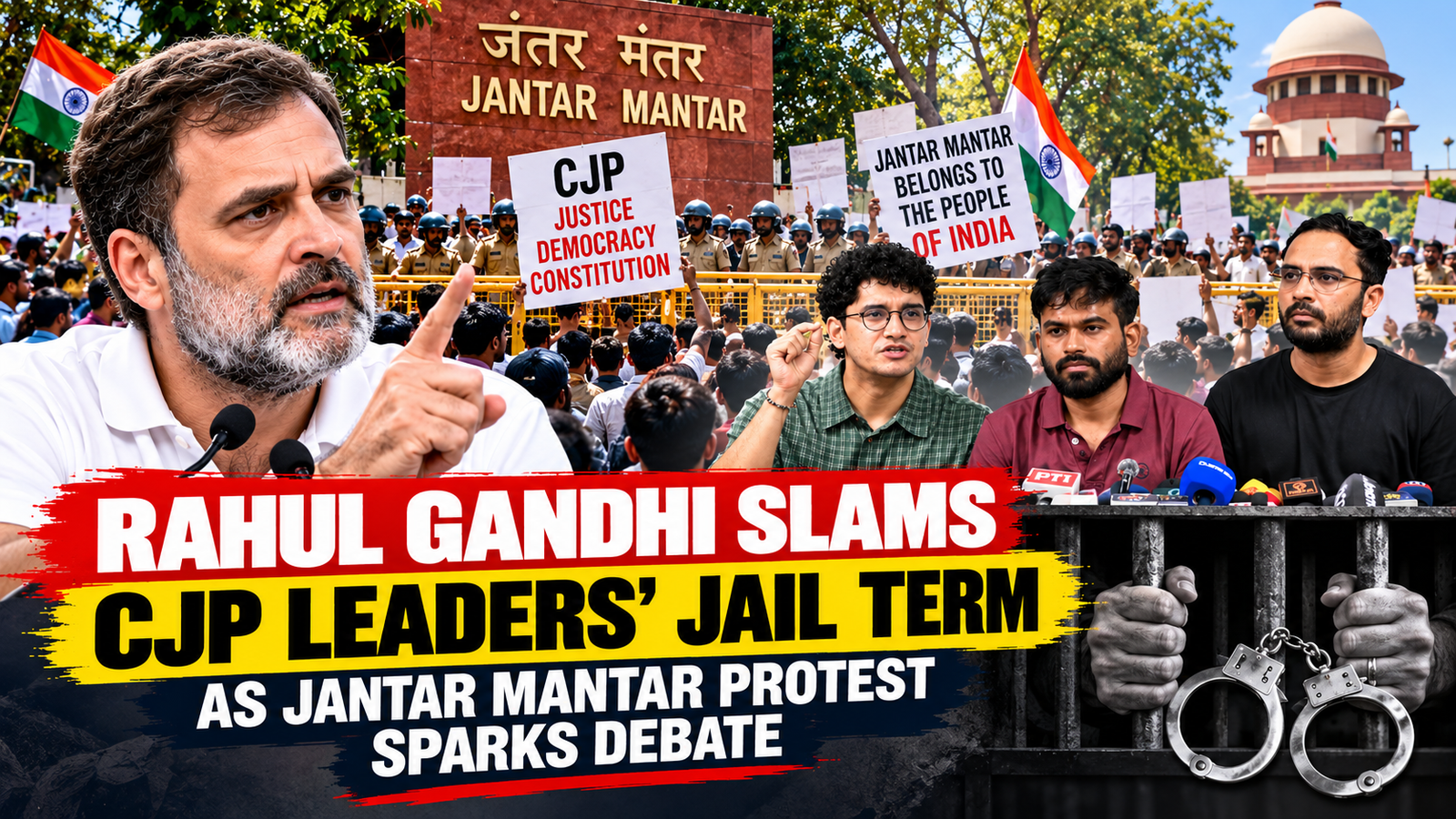
Congress leader Rahul Gandhi has criticised the judicial custody of Cockroach Janata Party (CJP) leaders Saurav Das and Ashutosh Ranka following a protest-related incident at Jantar Mantar in New Delhi. His remarks have renewed debate over freedom of expression, police action and the right of citizens to organise peaceful demonstrations.
Rahul Gandhi said that Jantar Mantar belongs to the people of India and questioned the action taken against the CJP leaders. The incident has also drawn attention to restrictions on protest venues and concerns raised by demonstrators about electoral processes.
Rahul Gandhi Questions Action Against CJP Leaders
Rahul Gandhi expressed concern over the five-day judicial custody of Saurav Das and Ashutosh Ranka. He argued that citizens should have the opportunity to express their views peacefully and raise questions about public institutions.
His remarks highlighted the importance of democratic participation and the right to voice disagreement. The controversy has since become part of a wider discussion about how authorities should respond to political demonstrations.
Why Were CJP Leaders Sent to Judicial Custody?
According to media reports, the two CJP leaders were sent to five days of judicial custody following the protest-related incident at Jantar Mantar.
Delhi Police alleged that protesters entered the area despite restrictions, crossed through private premises and obstructed officers performing their duties. Police cited these allegations when explaining their action.
These claims represent the authorities’ allegations and should not be treated as a final finding of guilt.
What Is the CJP Protest About?
The CJP protest has been associated with demands for accountability from the Election Commission of India, including concerns about electoral-roll revisions and the role of Chief Election Commissioner Gyanesh Kumar.
Protesters have raised questions about the Special Intensive Revision (SIR) of voter lists and election procedures. These issues have contributed to a broader political debate about transparency, voter registration and election administration.
Allegations about electoral irregularities should be distinguished from verified findings, and the responses of the relevant authorities should be considered when assessing the controversy.
Why Is Jantar Mantar Important?
Jantar Mantar is a well-known location for public demonstrations in New Delhi. Political parties, activists and civil society organisations have historically used the area to draw attention to their demands.
Restrictions on demonstrations at a familiar protest site can raise questions about access to public spaces and the availability of alternative venues. The debate also concerns how authorities can maintain public order while allowing citizens lawful opportunities to express their views.
What Does the Controversy Mean for Democracy?
The Rahul Gandhi Jantar Mantar controversy highlights the relationship between freedom of expression, public order and democratic participation.
Citizens need lawful ways to raise concerns about government institutions, while authorities are responsible for enforcing applicable rules. The challenge is to apply those rules fairly and transparently while respecting constitutional rights.
The incident has also brought electoral accountability into the discussion, particularly the need for transparent procedures to address concerns about voter lists and election administration.
Conclusion
Rahul Gandhi’s criticism of the CJP leaders’ judicial custody has brought renewed attention to the Jantar Mantar protest controversy. While Gandhi has emphasised democratic rights and freedom of expression, Delhi Police has cited alleged violations of restrictions and obstruction of officers.
The incident raises broader questions about access to protest venues, electoral accountability and the balance between public order and constitutional freedoms. The legal allegations must be assessed through the appropriate process, while the wider debate over democratic participation continues.
Frequently Asked Questions
Why did Rahul Gandhi criticise the CJP leaders’ jail term?
He criticised the judicial custody of Saurav Das and Ashutosh Ranka and raised concerns about freedom of expression and the treatment of political protesters.
Who are Saurav Das and Ashutosh Ranka?
They are CJP leaders named in reports about the Jantar Mantar protest-related incident and subsequent judicial custody.
Why were the CJP leaders sent to judicial custody?
Delhi Police alleged that protesters violated restrictions and obstructed officers. These allegations are separate from a final judicial finding.
What is the CJP protest about?
The protest has included demands for accountability from the Election Commission of India and concerns about electoral-roll revisions.
Why is Jantar Mantar significant?
Jantar Mantar is a recognised public demonstration location in New Delhi, historically used by political groups and activists to raise public issues.
