


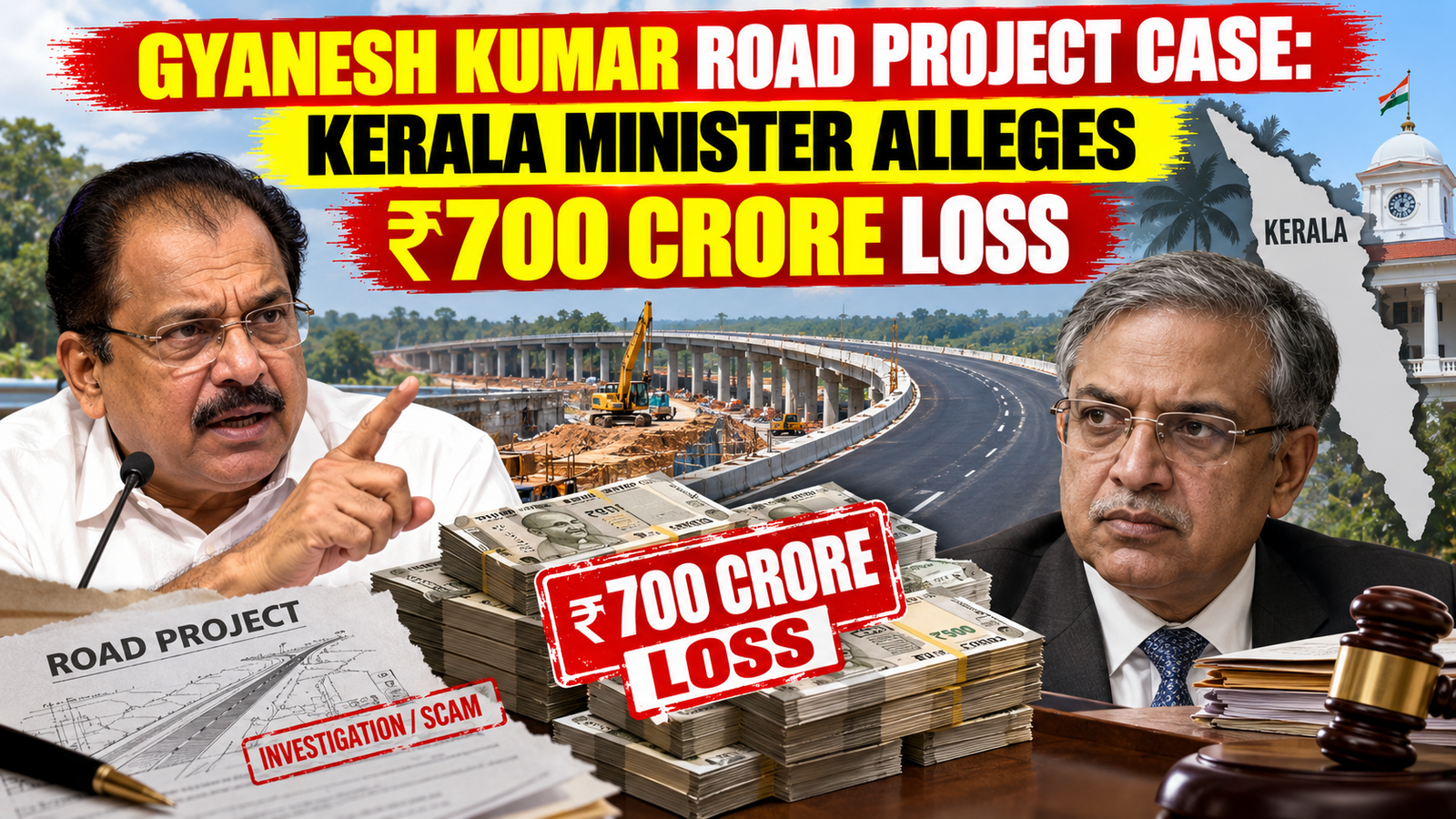
The Gyanesh Kumar road project case has drawn fresh attention after Kerala Public Works Department Minister P. K. Basheer told the state Assembly that a preliminary vigilance inquiry into alleged irregularities in a road development project is still underway. The minister said the alleged irregularities caused a loss of ₹700 crore to the government.
The case relates to the Kerala State Transport Project (KSTP), which was undertaken around 2006 when Gyanesh Kumar, now India’s Chief Election Commissioner (CEC), was serving as Kerala’s Public Works Department secretary. The project involved road reconstruction work funded partly through a World Bank-supported programme.
According to the minister’s statement on October 29, 2026, the fresh inquiry was ordered after discrepancies were identified in an earlier investigation conducted by the Vigilance and Anti-Corruption Bureau (VACB). The report from the current preliminary inquiry is not yet available, and the allegations remain subject to investigation.
What Is the Gyanesh Kumar Road Project Case About?
The Gyanesh Kumar road project case concerns alleged irregularities in the Kerala State Transport Project, a road development programme undertaken in the mid-2000s. The project included reconstruction of the Main Central Road, connecting Angamaly with Thiruvananthapuram.
The original project was reported to be worth approximately ₹215 crore. The contract was awarded to PATI-BEL, a joint venture involving a Malaysian firm and India’s Bhageeratha Engineering.
Gyanesh Kumar was serving as the state’s PWD secretary during the period under scrutiny. The investigation concerns alleged irregularities in the implementation of the project and the handling of payments and contracts.
The reported allegations do not establish that Kumar personally caused a financial loss. The ongoing inquiry is expected to examine the records and clarify the circumstances surrounding the project.
Why Did Kerala Order a Fresh Vigilance Inquiry?
Kerala PWD Minister P. K. Basheer told the Assembly that the fresh preliminary inquiry was ordered because discrepancies had been identified in the VACB investigation conducted in 2006.
The minister was responding to questions raised by BJP MLAs B. B. Gopakumar, V. Muraleedharan and Rajeev Chandrasekhar about the status of the vigilance probe.
The earlier investigation had examined alleged irregularities associated with the road project. The renewed inquiry aims to review the matter again in light of the concerns identified about the earlier probe.
Basheer said the current inquiry was still in progress and that its report had not been received. Until the investigating agency completes its work, the available information does not establish the final findings or whether further legal action will follow.
How Did the Minister Arrive at the ₹700 Crore Loss Figure?
The ₹700 crore figure was cited by Minister P. K. Basheer while discussing alleged irregularities connected with the project. It represents the government’s stated estimate of the loss associated with the alleged misconduct by officials.
The original road project was reported to be worth around ₹215 crore. The difference between the original project value and the alleged loss makes it important to understand precisely what the ₹700 crore estimate covers, including the calculations and components considered by the authorities.
The minister’s statement does not replace a completed investigation or a judicial finding. The preliminary inquiry report has not yet been submitted, so the basis and final assessment of the alleged loss remain matters for further examination.
Readers should therefore distinguish between the figure cited by the government and a loss formally established through a completed investigation or legal process.
What Was the Kerala State Transport Project?
The Kerala State Transport Project was designed to improve road infrastructure in the state. One of its major components involved upgrading sections of the Main Central Road, an important route linking several towns and cities.
The project received World Bank funding and involved contracts for road reconstruction. PATI-BEL, an Indo-Malaysian joint venture, was awarded work associated with the programme.
Large public infrastructure projects require transparent tendering, accurate cost estimates, timely payments and effective monitoring. Allegations of irregularities in such projects can lead to questions about how public money was allocated and whether the work followed the required procedures.
The ongoing vigilance inquiry is intended to examine the allegations associated with this particular project. Its findings will help clarify which claims are supported by evidence and whether any further action is justified.
How Is Malaysian Engineer Lee See Been Connected to the Case?
The controversy also involves Malaysian engineer Lee See Been, who worked as a project engineer associated with the Malaysian company involved in the road project.
Reports said Lee raised complaints about aspects of the construction work before returning to Malaysia, where he later died by suicide. His death and the allegations connected with the project have been mentioned in reports about the renewed vigilance inquiry.
The circumstances surrounding Lee’s complaints have contributed to renewed scrutiny of the project. However, claims made in connection with the case should be distinguished from facts established by investigators.
The current inquiry will need to assess the available records and evidence before any conclusions can be drawn about the allegations or the responsibility of individuals involved.
What Happened in the Earlier 2006 Vigilance Probe?
The VACB conducted an earlier investigation into alleged irregularities connected with the project in 2006. Kerala’s Home Minister Ramesh Chennithala later said the earlier probe had concluded that further investigation was not required because the allegations could not be proved, according to previous reports.
The state government has now ordered a fresh preliminary inquiry after identifying discrepancies in the earlier investigation. This does not automatically mean that the allegations have been established; it means authorities are examining whether the earlier handling of the matter requires further scrutiny.
The current inquiry report remains pending, according to the PWD minister’s statement to the Assembly on October 29, 2026.
The outcome will depend on the evidence reviewed by the vigilance agency and any subsequent legal or administrative proceedings.
What Happens Next in the Gyanesh Kumar Case?
The immediate next step is for the Vigilance and Anti-Corruption Bureau to continue its preliminary inquiry and submit its findings to the relevant authorities.
Investigators may review project documents, contract records, payment details and material from the earlier investigation. Their findings could determine whether the case requires further investigation or other action under the applicable procedures.
The government has not yet received the preliminary report, according to the minister. Therefore, the final outcome remains uncertain.
It is also important to separate the inquiry into the old road project from Gyanesh Kumar’s current role as Chief Election Commissioner. Allegations relating to his earlier administrative tenure must be assessed on their own evidence and through the appropriate legal process.
Conclusion
The Gyanesh Kumar road project case has returned to public attention after Kerala’s PWD minister said a preliminary vigilance inquiry into alleged irregularities remains underway. The minister cited an alleged government loss of ₹700 crore linked to the Kerala State Transport Project, undertaken when Kumar served as the state’s PWD secretary.
The fresh inquiry was ordered after discrepancies were reportedly identified in the earlier 2006 investigation. However, the current report has not yet been submitted, and the allegations should not be treated as proven wrongdoing.
The next major development will be the findings of the Vigilance and Anti-Corruption Bureau. Those findings should help clarify the allegations, the basis of the reported financial loss and whether further action is warranted.
Frequently Asked Questions
1. What is the Gyanesh Kumar road project case?
It concerns allegations of irregularities in the Kerala State Transport Project, a road development programme undertaken around 2006 when Gyanesh Kumar was serving as Kerala’s PWD secretary.
2. Why is ₹700 crore being mentioned in the case?
Kerala PWD Minister P. K. Basheer told the state Assembly that alleged irregularities connected with the project caused a government loss of ₹700 crore. The current inquiry report has not yet been submitted.
3. Is the vigilance inquiry against Gyanesh Kumar complete?
No. As of October 29, 2026, the preliminary inquiry by the Vigilance and Anti-Corruption Bureau was still underway, according to the minister.
4. What was the Kerala State Transport Project?
The Kerala State Transport Project was a road development programme that included reconstruction work on the Main Central Road. The project was reported to have an original value of approximately ₹215 crore.
5. Who was Lee See Been?
Lee See Been was a Malaysian engineer associated with the project. Reports said he raised complaints during the construction period and later died by suicide in Malaysia.
6. Have the allegations against Gyanesh Kumar been proven?
The available reports do not establish a final finding of guilt. The preliminary inquiry remains ongoing, and its findings have not yet been submitted.
7. What happens after the vigilance report is submitted?
Authorities can review the findings and decide whether further investigation or other action is necessary. Any conclusions about responsibility should be based on evidence and the applicable legal process.
